
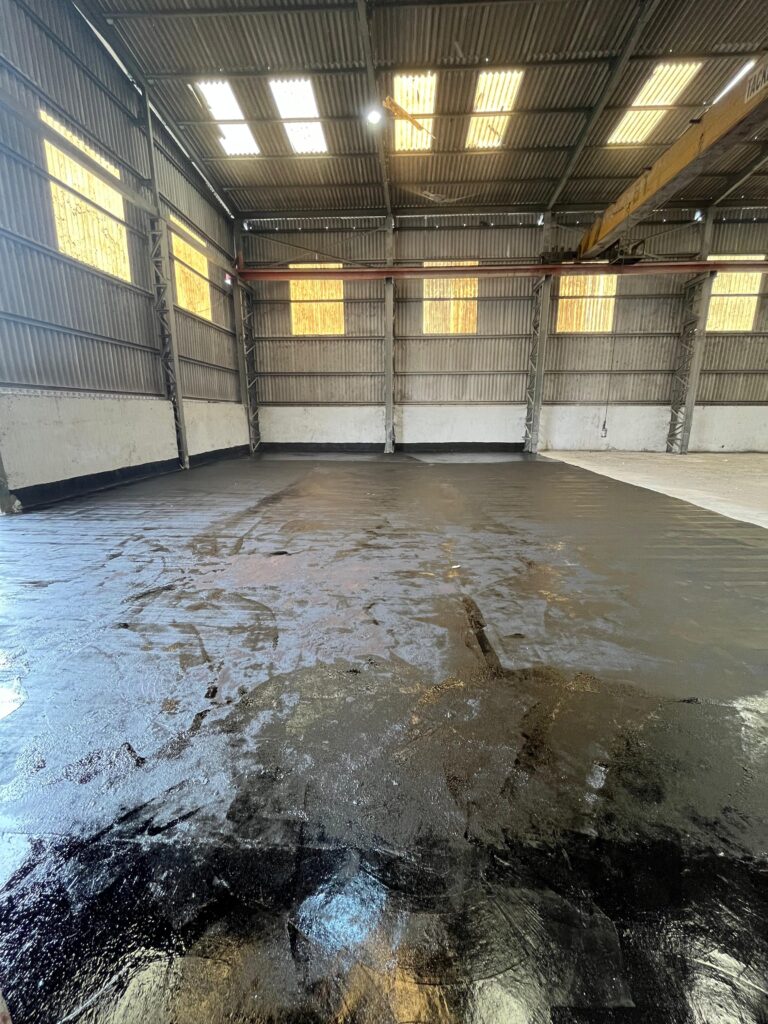
Bitumen Mastic lining for Pickling Plant
What Is a Pickling Plant — and Why Is It So Corrosive?
In metalworking, pickling is the chemical removal of oxide scales, rust, and surface impurities from steel, iron, copper, and other metals using strong acid baths. Before any sheet metal can be galvanised, cold-rolled, drawn, or coated, it must pass through the pickling line.
The Real Corrosion Problem in a Pickling Plant
Most plant managers focus on the primary acid tanks — and rightly so. But pickling plants produce corrosion in multiple zones that are often overlooked until failure occurs.
How Acid Destroys Unlined Concrete
Ordinary concrete is highly vulnerable to acid attack. Calcium silicate hydrate (the main binder in concrete) reacts with both HCl and H₂SO₄, converting it into soft, easily eroded material. The reaction with H₂SO₄ additionally produces expansive gypsum crystals that physically crack the matrix from within — a process called sulfate attack.
Acid Fume Condensate — The Hidden Attacker
Even areas far from direct acid contact suffer. Acid vapours — especially from HCl and H₂SO₄ baths — condense on cooler surfaces like walls, roofing supports, and floor drains. This condensate is almost as corrosive as the bath itself, quietly eating into unprotected surfaces over time.
Why Bitumen Mastic Is the Right Lining for Pickling Plants
Bitumen Mastic is not a paint or a thin-film coating. It is a thick, aggregate-filled, impermeable membrane system — typically 10–40mm thick — that physically separates the acid from the structural substrate. This distinction matters enormously in a pickling environment.
Here is what makes it the preferred choice for pickling plant protection:
1. Near-Zero Permeability
Bitumen Mastic is dense and void-free when correctly applied. Acid cannot penetrate through it to reach the surface. Thin coatings, by contrast, develop microscopic pinholes during cure — pathways for acid to creep behind the film and cause hidden undercutting corrosion.
2. Excellent HCl Resistance at Pickling Concentrations
At the 15–22% HCl concentrations typical of industrial pickling baths, Bitumen Mastic performs reliably as a barrier membrane. The bitumen binder is inherently non-reactive with hydrochloric acid, and the aggregate filler provides mechanical stability under chemical exposure.
3. Flexibility Absorbs Thermal Cycling
Pickling tanks go through significant temperature cycles — cold fill, hot bath operation, shutdown, cleaning. Rigid linings (like some epoxies) can crack under this thermal stress. Bitumen Mastic retains elasticity, allowing it to flex with the substrate without cracking or delaminating.
4. Alkaline Wash Compatibility
Most pickling lines include rinse tanks and alkali neutralisation baths. Bitumen Mastic is resistant to both mildly acidic and mildly alkaline environments, meaning a single lining system can protect the full tank sequence from pickling bath to neutraliser sump.
5. Long Service Life at Low Cost
Correctly installed Bitumen Mastic in a pickling environment delivers 10–15 years of service life — far exceeding thin-film coatings (2–5 years) and rivalling far more expensive rubber lining systems, at a significantly lower installed cost.
Critical Zones in a Pickling Plant That Need Lining
A comprehensive pickling plant protection strategy goes beyond just the primary acid tank. These are the zones Chemicraft evaluates and lines in every pickling plant project:
🛢️Pickling Bath Tank
🚿Rinse Tank
🔩Acid Storage Tank
💧Floor Sumps & Drains
⚗️Neutralisation Pit
🏭Plant Floor & Bund Walls
🌫️Fume Scrubber Base
🔄Spent Acid Collection Pit
Contact Us:
Mobile No.: +91 8511756947, +91 9724765574
Email: chemicraft963@gmail.com


Frequently Asked Questions(FAQs)
Is Bitumen Mastic Lining suitable for HCl pickling tanks?
Yes. Bitumen Mastic provides excellent resistance to hydrochloric acid at the 15–22% concentrations typical in industrial galvanising and pickling operations. The membrane acts as a complete barrier preventing HCl from reaching the concrete or steel substrate.
Can Bitumen Mastic handle H₂SO₄ in pickling applications?
Bitumen Mastic provides good-to-excellent resistance to dilute sulfuric acid (up to 20–25%) at temperatures below 60°C — which covers most H₂SO₄ pickling bath conditions. For higher concentrations or elevated temperatures above 70°C, we recommend a combination system: Bitumen Mastic membrane as the base layer with an acid-proof brick and CNSL mortar overlay for superior performance and longevity.
How long does Bitumen Mastic Lining last in a pickling environment?
Bitumen Mastic lining in a pickling plant environment typically achieves 10–15 years of service life. Annual visual inspections and proactive repairs of any mechanical damage extend service life further.